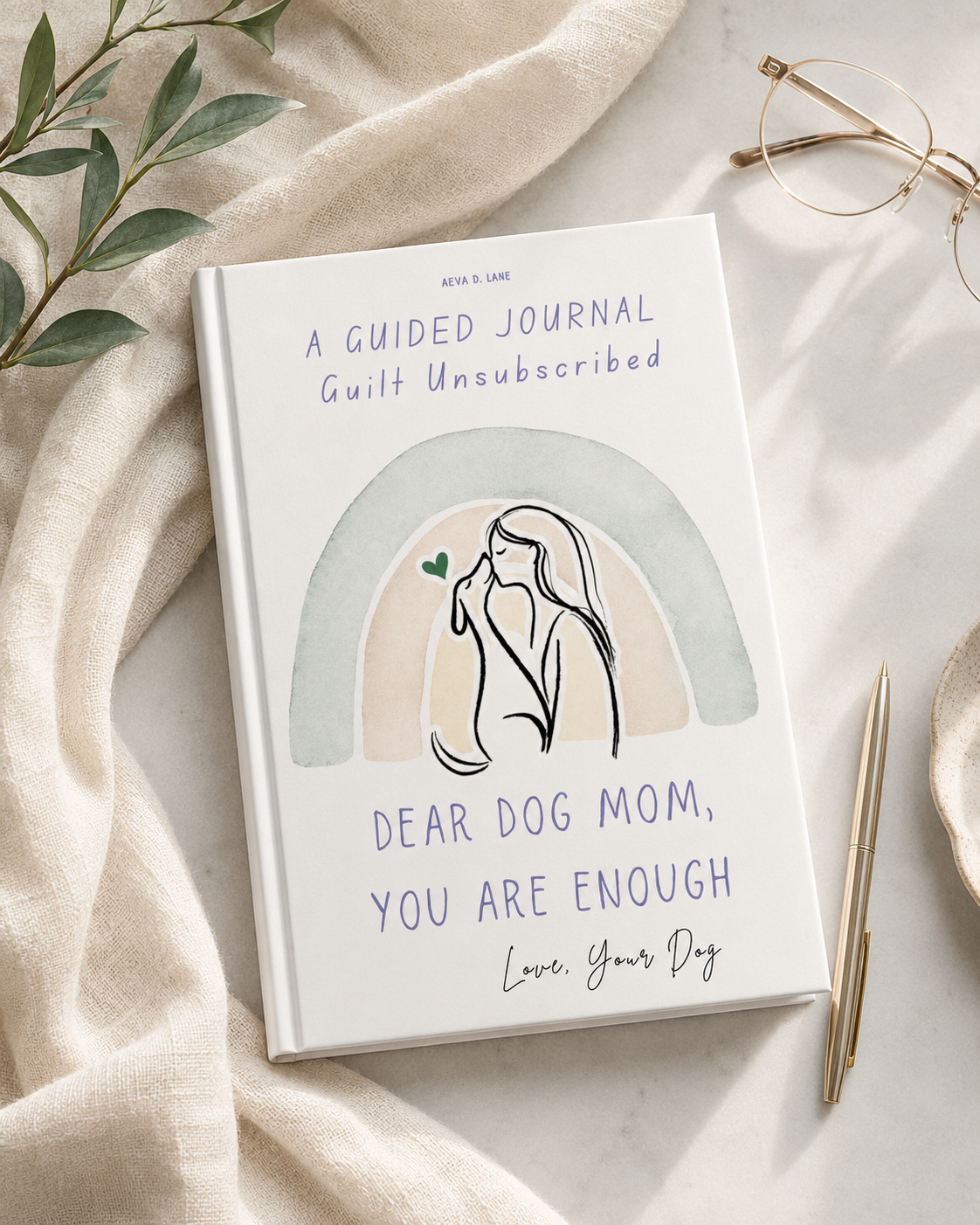
The guilt says you're failing them.
Your dog disagrees.
You skipped one walk. You raised your voice once. You chose the affordable vet option.
And somehow that became proof that you're a bad dog mom.
This journal doesn't ask you to slap a positive thought over a guilty one. It helps you figure out
what the guilt is actually saying — and whether any of it is true.
Paperback · guided journal · 6×9 · therapy-inspired prompts
Dog mom guilt is uniquely brutal because nobody takes it seriously. Your friend gets sympathy for their parenting stress. You get a polite nod. Every guilt below is real. The question is whether it's telling you the truth.
"I leave them alone too much."
"I lost my patience with them."
"I can't afford everything I wish I could give them."
"I skipped walks because I was exhausted."
"I compared myself to other dog moms and felt like I was failing."
"I had a moment of regret about getting them." — the one nobody admits out loud
"I worried so much it stopped me from actually enjoying them."
"I cried about them and felt embarrassed about how much I care."
They don't know about the walk you skipped. They know you came home. They know your smell, your voice, your heartbeat. You are their entire world — not your best version of yourself. Just you, exactly as you are.
— What your dog actually thinks of youEach chapter takes you through a different layer of the guilt cycle — naming it, understanding what it's actually protecting, and deciding what to do with it.
Before we tackle the guilt, we establish the baseline: you are doing something remarkable. Not "proud but also a little embarrassed." Actually proud.
Name every guilt you carry. Examine which ones are pointing at something real and which ones are just noise. Turns out, most of them are noise.
Instagram dog moms with custom meal plans and daily enrichment activities. You, eating toast over the sink. This chapter is for that gap.
Not settling for less — redefining the standard so it's based on what dogs actually need, not what guilt tells you they deserve.
The guilt loop runs on a story you keep telling yourself. This chapter helps you identify it, examine it, and decide if you want to keep running it.
You don't have to earn your dog's love. You already have it. This chapter is about actually believing that — not just knowing it intellectually.
Not "write three things you're grateful for." These prompts go somewhere.
The guilt I carry most often is _____
Be specific — not just "I feel like a bad dog mom." Which one, exactly?What a kind friend would say about the same situation
If your best friend told you this guilt, what would you actually tell her?What my dog actually experienced in that moment
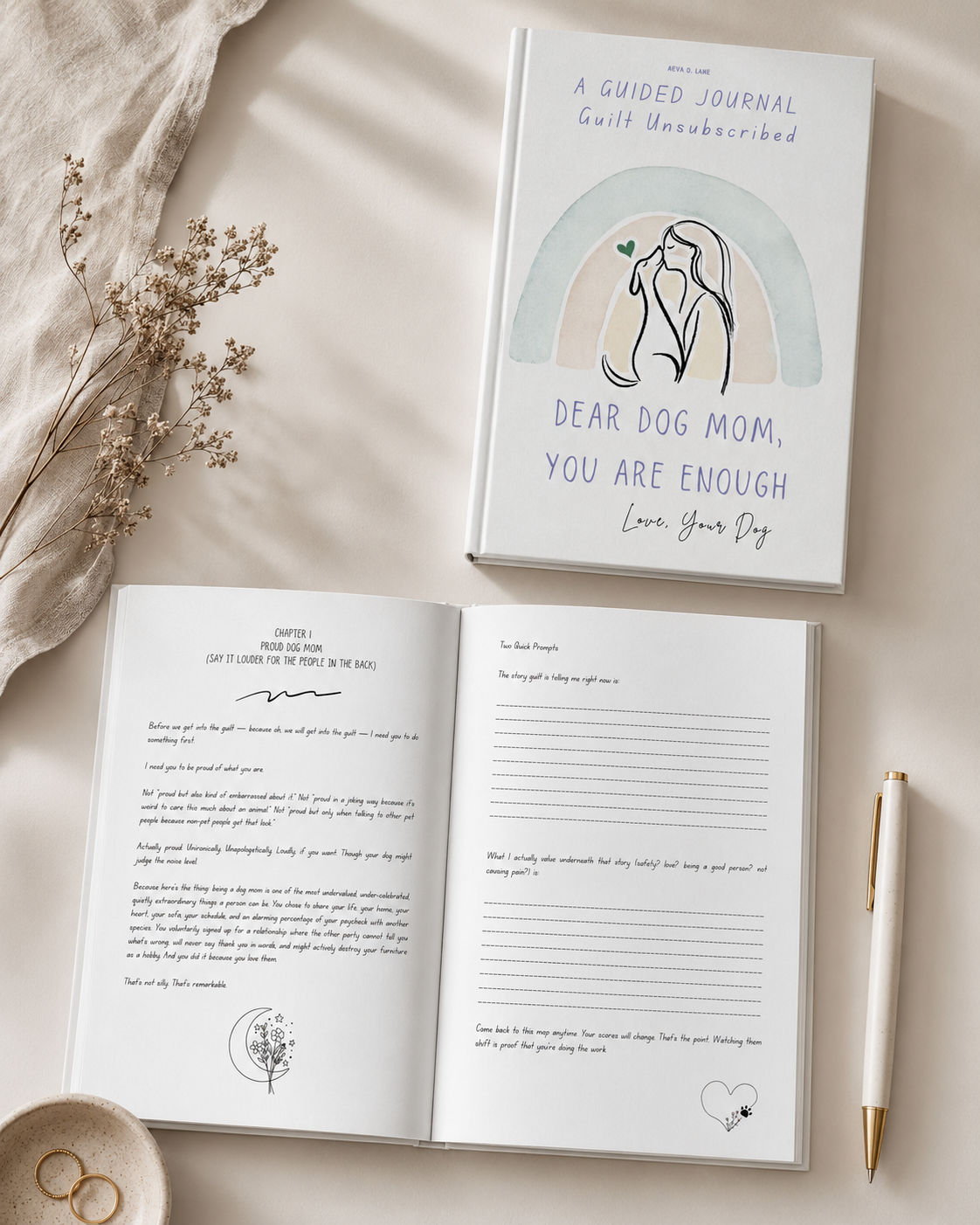
Not your story about it — what they experienced. Warmth? Safety? Their person coming home?The story guilt is telling me right now is _____
Name the exact sentence guilt keeps repeating — then decide whether it deserves authority.
A free one-page worksheet that does what the name says: names every guilt you carry, asks whether any of it is actually true, and shows you what your dog experienced instead of the story you've been telling yourself.
Every common dog mom guilt, listed. Check the ones you carry. Including the one nobody admits out loud.
Three prompts to interrogate the guilt — and find out how much of it is true versus noise.
Not what the guilt says. What they experienced. Their person came home. That's all they needed.
Free PDF · delivered by email · no spam · unsubscribe anytime (...I know)
You've Googled "am I a bad dog mom" at least once — not as a joke.
You feel genuine guilt about things other people would call completely normal — one skipped walk, one moment of frustration, one day you were too tired.
You care so much it sometimes stops you from just enjoying them. The guilt is louder than the actual relationship.
You've compared yourself to other dog moms and come up short — despite the fact that your dog has never once asked you to.
You know logically that you're enough. You just can't quite get your feelings to agree.
You want something with real depth — not a book that tells you to journal about what makes you happy, but one that actually helps you understand what's running underneath.
The guilt loop will keep running until you interrupt it with something true. This journal is that interruption. Gently. With humor. Without any of the fluffy reassurance that never quite lands.