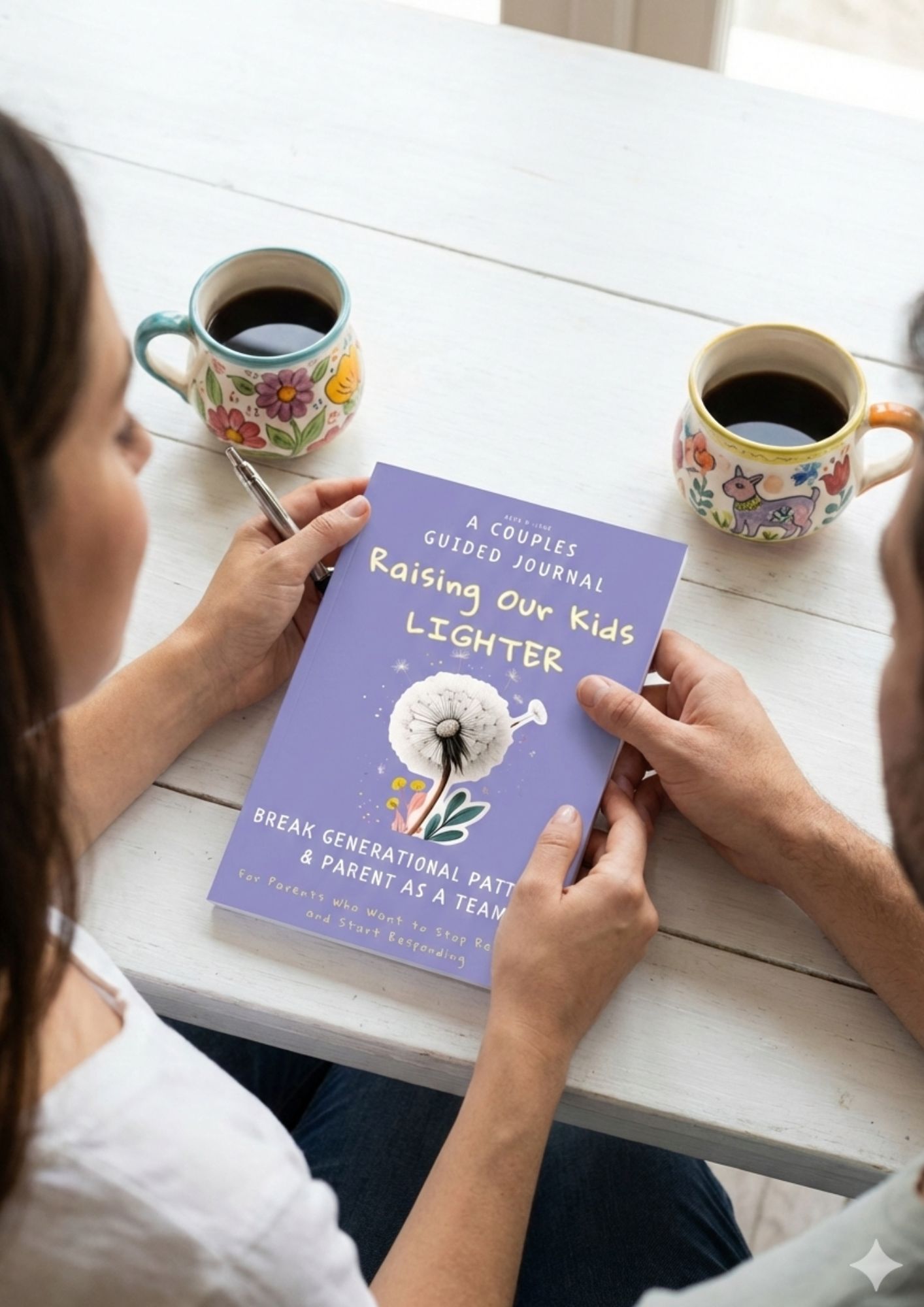
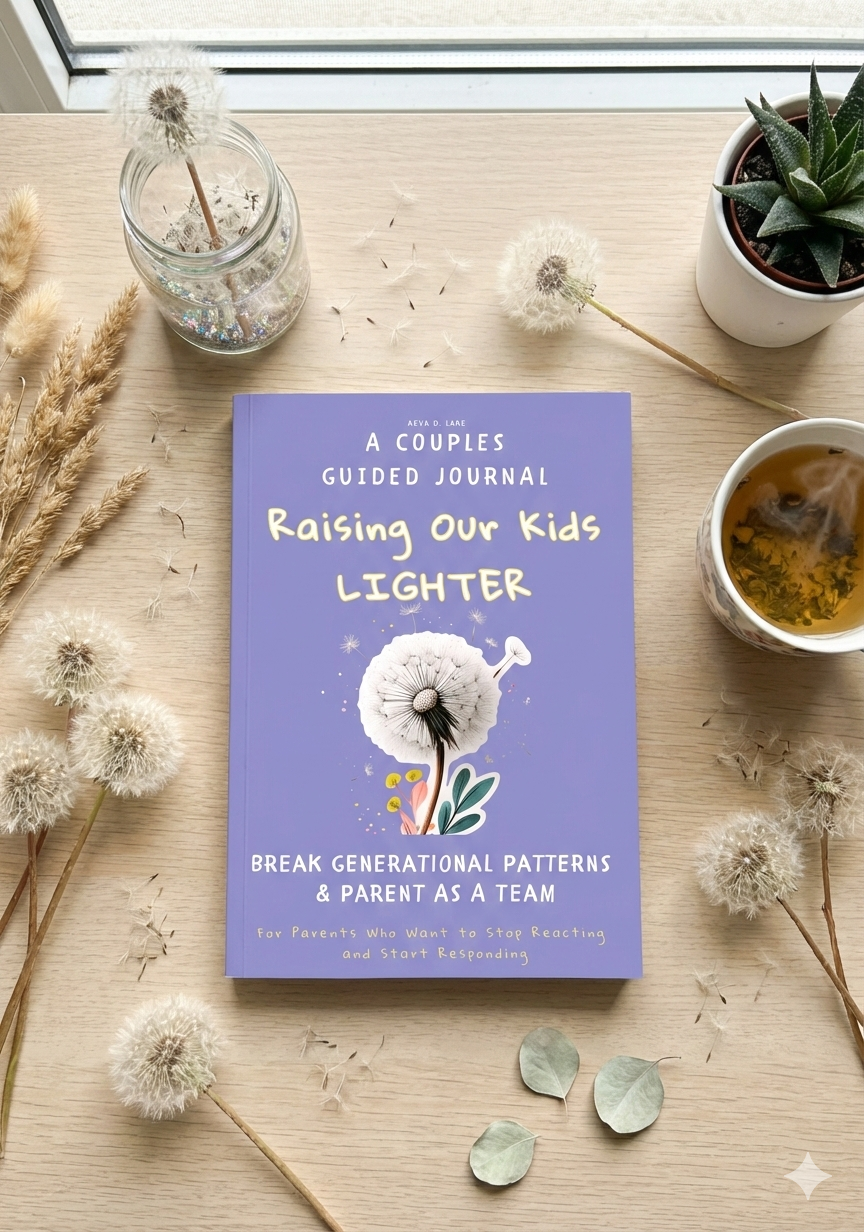
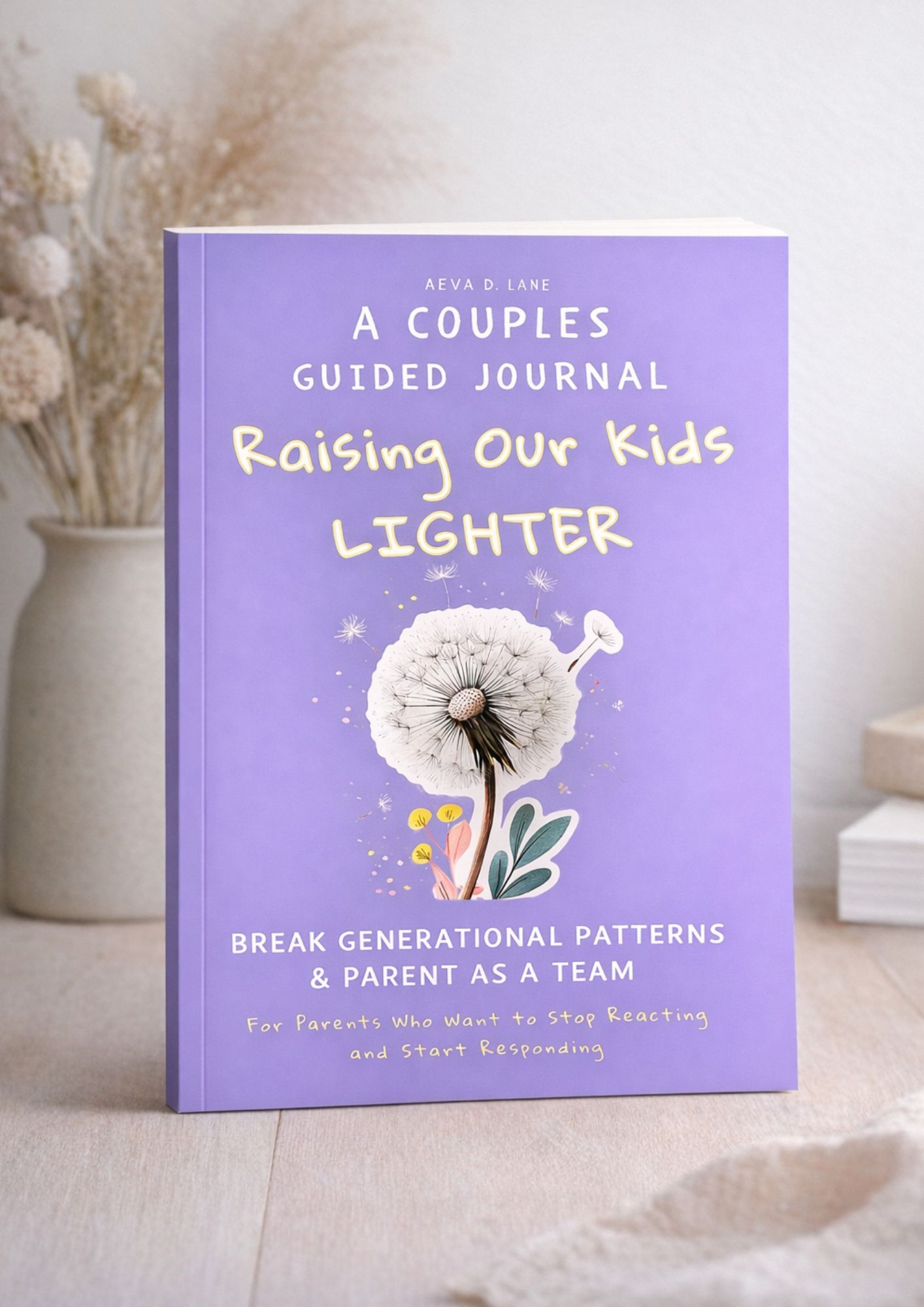
That reaction you swore you'd never have? Not a character flaw — a nervous system running an old script, faster than you can think. This journal helps you trace it back to where it started, understand what it's protecting you from, and write a calmer one. For you. Then for everyone around you.
Not therapy. But the journal your therapist would probably assign you anyway.
★★★★★ "I wish I had this before my first baby" — read reviewsAlready sold? Get your copy on Amazon — $19.99 →
Psychology-informed. Attachment-aware. For the moments you lose it — without the price tag or the waitlist.
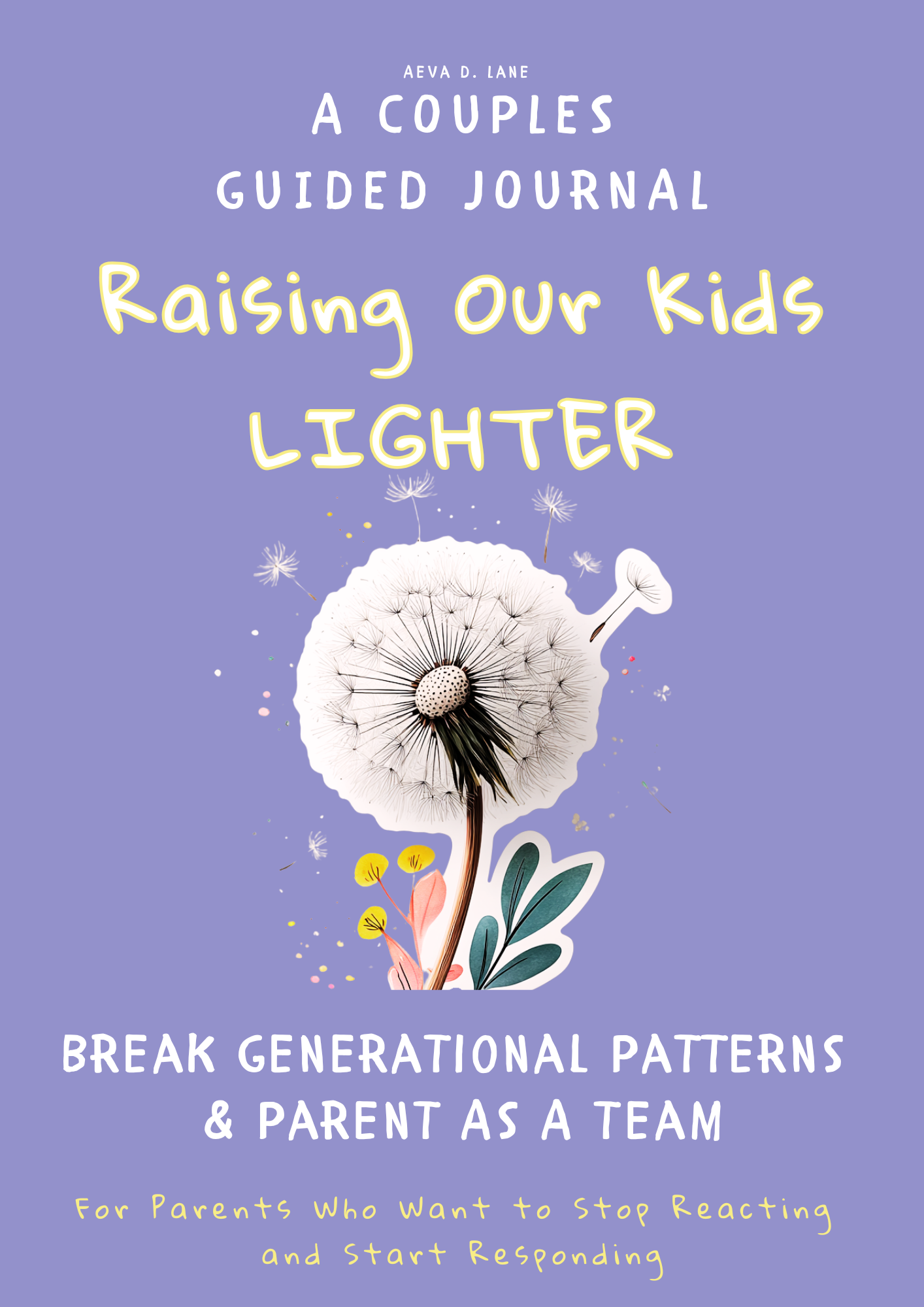
This isn't a parenting tips book. There are 47,000 of those. This one is about the deeper work — understanding where your parenting instincts come from and deciding what to keep.
It's for the parent who wants to respond with intention — not just react on autopilot. For the one ready to go deeper than tips and tricks. For the one who knows that "we turned out fine" is doing a lot of heavy lifting.
Paperback on Amazon, write directly inside — or the printable PDF on Payhip if you'd rather use your own notebook.
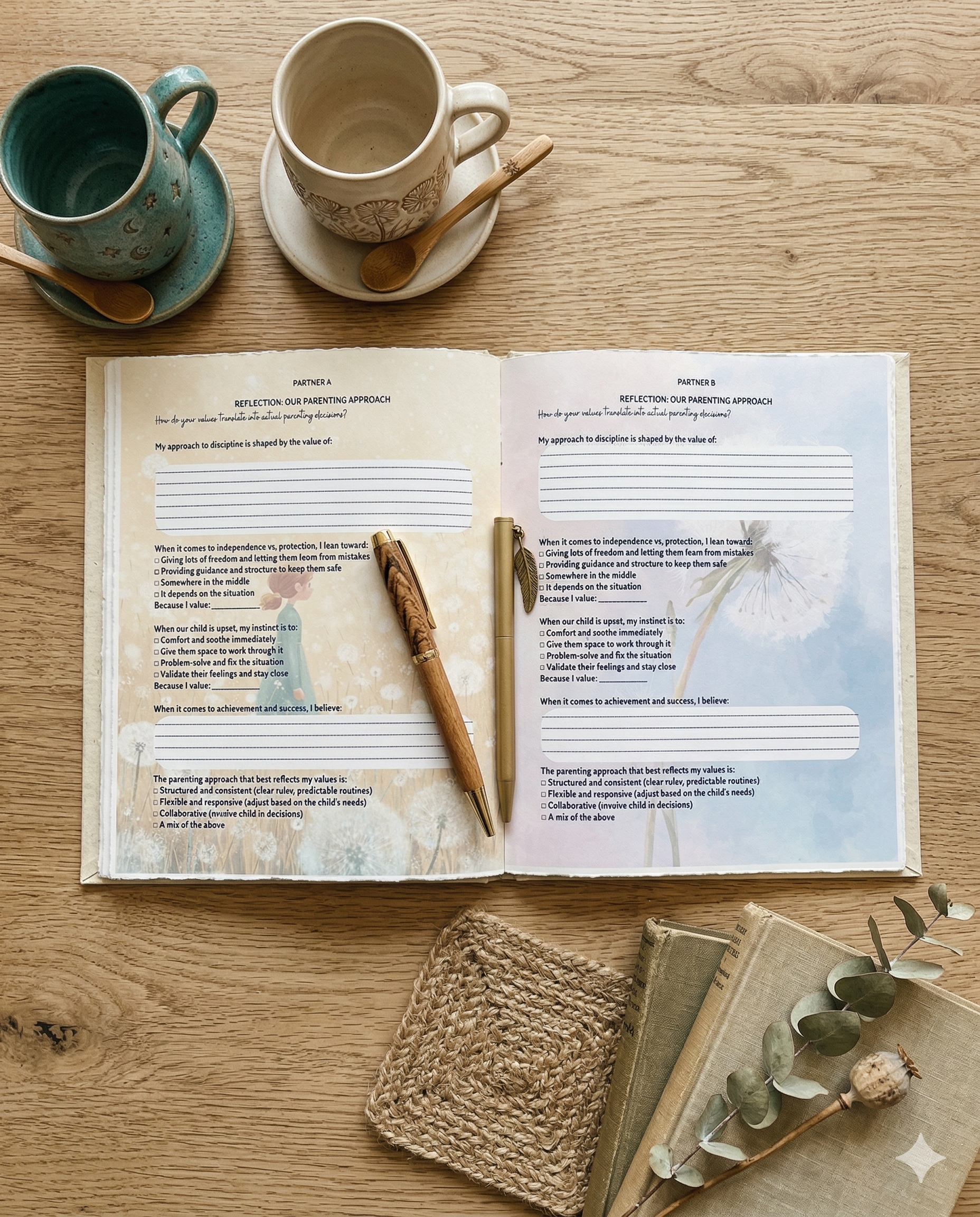
Six chapters. Hundreds of prompts. The conversations you've been avoiding. And hopefully, by the end, a shared understanding of how you're going to parent together — instead of just winging it.
Where you each came from. The emotional climate. The parenting styles. The conflict patterns. The roles you played. What you absorbed. This is the foundation — you can't choose differently if you don't know what you're choosing from.
What actually matters to each of you — not what you think should matter, but what actually does. How to create shared values when your backgrounds differ. Your family mission statement. Yes, really.
The specific patterns you're interrupting. Your triggers — the moments when you're most likely to default to old patterns. How you will handle discipline differently. What repair looks like. This is where intentions become actions.
How to navigate different styles without resentment. How to handle disagreements. How to stay connected as partners, not just logistics coordinators who happen to live together and share a tiny human.
The daily rhythms you're creating. Traditions, boundaries, money, technology — all the practical stuff that reflects your values. This is you building something yours, not just replicating or reacting to how you were raised.
Letters to your children and your future selves. Values you want to live. Patterns you chose to stop. The promises you're making to the generations that come after you. This is the big picture — and it makes every uncomfortable chapter before it worth it.
Each partner answers their prompts individually. Don't sit there reading over each other's shoulders. Give yourself space to be honest. Write what you actually think, not what you think they want to hear.
Come together for the couple conversation sections. That's when you understand each other. The job is to listen and notice: "Oh. That's how this landed for you." Curiosity, not criticism.
See where your childhoods collide. Understand why you disagree. Then choose how you'll actually parent together — not identically, but as a team. Even when you disagree. Especially when you disagree.
Every other parenting resource tells you what to do. This one tells you why you're doing what you're doing. That's the work that sticks.
Most healing work happens alone, in your own head, with no one else in the room. This one doesn't stop there. When you're ready, there's a path to bring the person parenting alongside you in — not couples therapy, just two childhood blueprints, side by side, so you're not the only one doing this.
Shaped by attachment theory, neuroplasticity, and family systems — translated into real-world prompts. Therapy-level depth without the therapy price tag. Can complement sessions or stand alone while you're on a waitlist.
For the parent who keeps having the same fight — with their kid, with themselves, or with the person across the table. For the one doing all the emotional labour. For the partner who isn't ready yet but might be if they had a way in. The same fight stops being about the topic when you see what's actually driving it.
"I wish I had this before I had my first baby. The disagreements it might have stopped and the growing pains it could have lessened. This is such a thoughtfully written book. I think this would be a good baby shower gift for soon to be new parents but it can definitely help at any stage."— Amazon Reviewer
"I've never seen a parenting book like this. It's a very thorough guide for examining one's own upbringing — how to recognize patterns of behaviors/feelings and using those insights to set expectations and goals TOGETHER as a couple for their children. Never too late to develop a plan or change direction but definitely recommended before having children."— Amazon Reviewer
"What sets this book apart is its focus on breaking generational patterns. Rather than parenting out of habit, fear, or frustration, couples are invited to pause, examine their own upbringing, and intentionally choose responses rooted in grace, wisdom, and biblical principles. The guided prompts help parents identify emotional triggers, align on shared values, and build a stronger foundation as a team."— Amazon Reviewer
Grab the Raising Kids Lighter Trigger Tracker — a free downloadable tool to help you pause, understand your triggers, and choose a lighter response:
No email required. Just a gift to help you keep going.
If you've ever thought, "Why do I keep reacting this way?" or "Why can't my partner just see what I see?" or "I don't want my kids to carry what I carried" — this journal is your answer.
Available as a paperback via Amazon, or as a printable PDF you can download and print at home from Payhip.
The baby shower gift nobody thinks to give — the one that actually matters. Also perfect for expecting couples, anniversary gifts, or anyone whose therapist keeps saying "it goes back to your family of origin."
This journal is designed so you can start on your own. Many partners come around once they see the prompts — they're not "how do you feel?" fluff. They're specific, practical, and surprisingly engaging. The "reluctant partner" section is built right in.
No — and it says so clearly inside. It's psychology-informed and therapeutically deep, but it's not a substitute for professional help. It can complement therapy, serve as homework between sessions, or be the structured work you do while you're on a waitlist.
It's actually the perfect time. You have something incredibly precious right now: time and the ability to complete full sentences. Getting aligned before the baby arrives means you won't be making major parenting decisions on two hours of sleep.
The Amazon version is a professionally printed paperback with space to write directly in the journal. The Payhip version is a digital PDF companion — every prompt and psychology insight is included, designed for use with your own notebook or notes app.
You didn't choose the parenting software your childhood installed. But you do get to choose what runs from here.
Intention over autopilot.
Awareness over avoidance.
Together over alone.
Your children won't remember if the house was clean or if dinner was late. They'll remember how it felt to be in your home. They'll remember if they felt safe to cry, to fail, to be themselves. They'll remember if you apologised when you messed up. And they'll carry forward what you modelled — not what you said, but how you lived.
Part of the Our Memories for Keeps series by Aeva D. Lane